Natural Support Categories
An informational overview of generalized categories of natural compounds and lifestyle approaches frequently discussed in the context of male vitality, joint flexibility, and an active lifestyle.
Educational Scope Notice: The following categories are presented for general informational and educational purposes only. This content does not endorse specific products, suggest specific dosages, or provide any form of medical advice. Approaches to well-being vary among individuals. Always consult a qualified healthcare professional before adopting any new wellness practice.
Exploring Essential Nutrients for Male Well-being
This category details the general roles of key vitamins and minerals recognized as important in the context of men's overall vitality. Nutritional science identifies several compounds whose adequate dietary intake is associated with the maintenance of general energy metabolism, immune function, and structural tissue health.
Core Areas of Nutritional Science
Research in nutrition broadly identifies that micronutrient adequacy — achieved primarily through a varied, whole-food diet — underpins general metabolic processes. Key vitamins and minerals studied in this context include fat-soluble vitamins (A, D, E, K), water-soluble vitamins (the B-complex group and vitamin C), and essential minerals such as zinc, magnesium, selenium, and iron.
- Supports general energy-yielding metabolic processes
- Contributes to the normal function of the immune system
- Aids in the maintenance of muscle and bone structure
- Supports normal neurological and cognitive function
- Participates in the regulation of hormonal balance at a general level
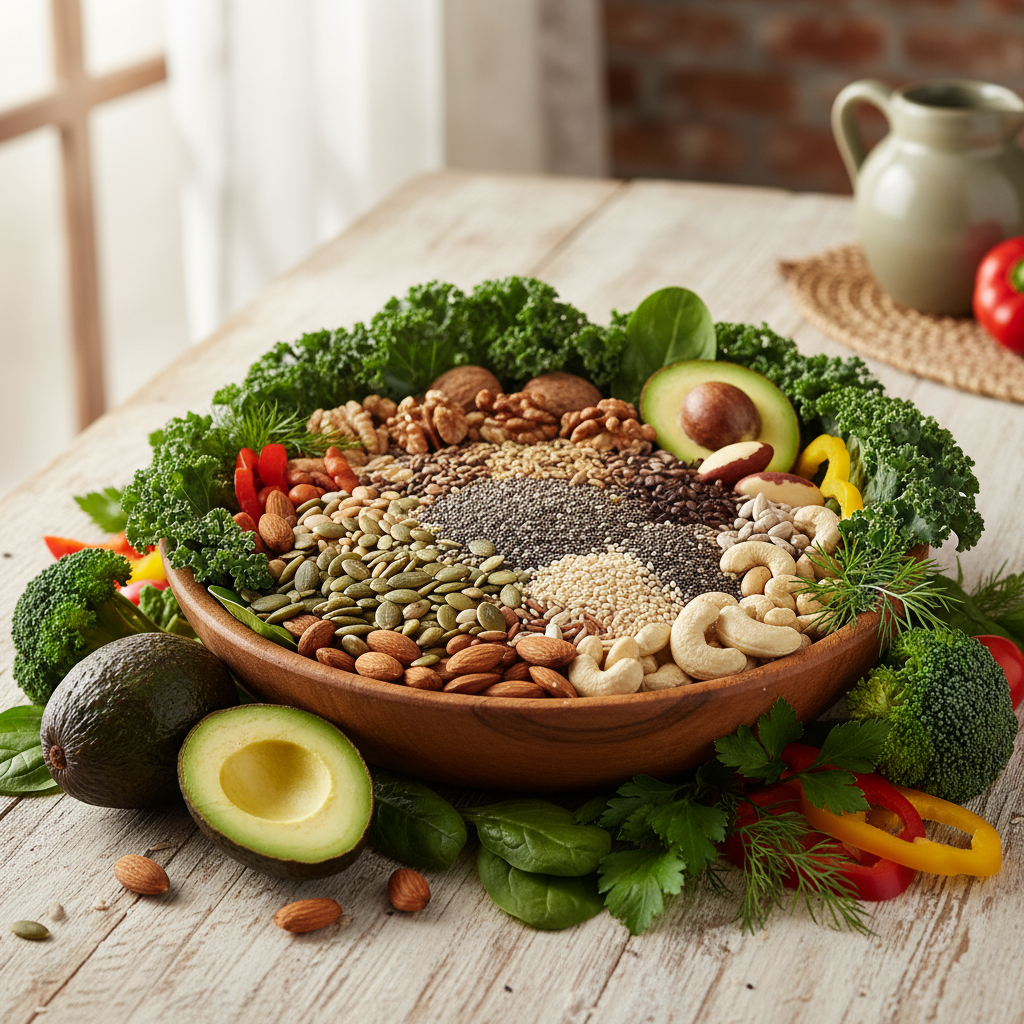
Nutritional adequacy is best achieved through dietary diversity. This category provides general context only.
Herbal Adaptogens for Stress Management
The concept of "adaptogens" refers to a class of natural substances — primarily plant-derived — that traditional and contemporary wellness literature describes as supporting the body's general capacity to respond to stressors. The term was formalized in Soviet pharmacological research in the mid-20th century, though many of the herbs within this category have far longer histories of traditional use.
Traditional systems such as Ayurveda, Chinese herbalism, and Indonesian jamu have independently identified plants that appear to support a general sense of resilience and equilibrium. Contemporary nutritional research continues to study these compounds at a basic science level.
Traditionally Referenced Adaptogenic Herbs
- —Ashwagandha (Withania somnifera) — Ayurvedic tradition
- —Rhodiola rosea — Traditional Scandinavian and Russian use
- —Eleuthero (Siberian Ginseng) — Eastern European and Asian folk herbalism
- —Holy Basil (Tulsi) — Indian traditional wellness practice
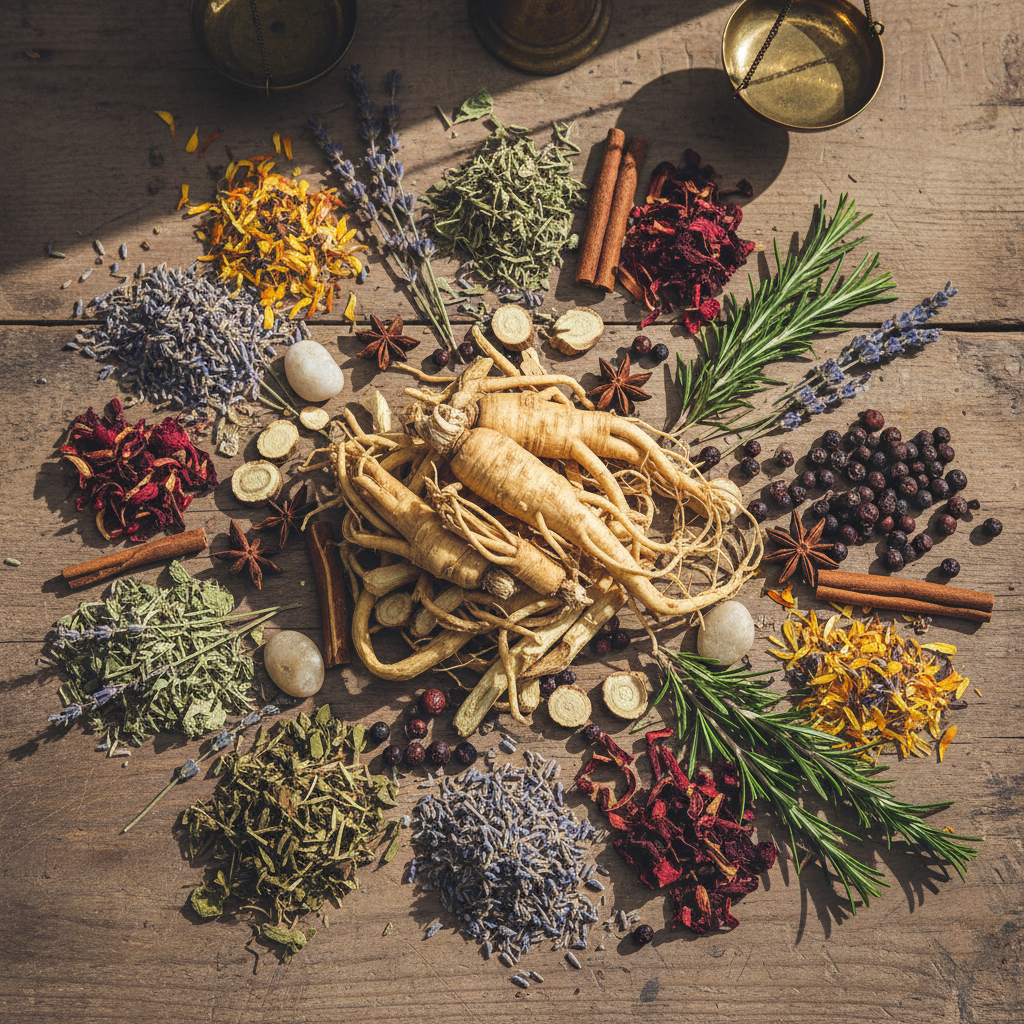
The historical use of adaptogenic herbs spans diverse global traditions. Descriptions here are informational and historical in nature.
Natural Compounds for Joint Flexibility Insights
Joint flexibility and comfort are influenced by multiple factors including the structural integrity of cartilage and connective tissue, synovial fluid quality, and surrounding muscular support. Several natural compounds are frequently studied in nutritional science literature for their general associations with joint-related structural markers.

Glucosamine and Chondroitin
Naturally occurring compounds found in cartilage, these are among the most extensively studied in the context of joint structure maintenance. Their presence in connective tissue has made them subjects of nutritional research.
- Contributes to joint lubrication
- Supports cartilage structural integrity
Collagen Peptides
Collagen is the primary structural protein in connective tissues. Food sources including bone broth, fish, and certain animal products contain collagen precursors that are studied in the context of connective tissue nutrition.
- Aids in connective tissue health
- Supports general structural resilience
Turmeric (Curcumin)
Turmeric contains curcumin, a polyphenolic compound widely studied in basic nutritional science. It has a long history in Indonesian (jamu) and South Asian traditional use, often in culinary applications.
- Well-documented in traditional wellness literature
- Subject of ongoing nutritional research

Traditional Botanicals for Sustained Energy
Various botanical plants have been used across traditional cultures to support general vitality and endurance. These are distinct from stimulant compounds such as caffeine; instead, they are described in traditional texts as gentle, sustained supports for physical and mental resilience.
Key Botanicals in Traditional Literature
- Maca Root — A Peruvian plant used in Andean traditional culture for generations as a general energizing food source. Widely cultivated and incorporated into various wellness traditions globally.
- Schisandra Berry — A berry used in Traditional Chinese Medicine, referenced in classical texts as a plant supporting general resilience and endurance. Known as one of the "five taste" fruits in Chinese herbalism.
- Cordyceps — A fungus used in traditional Tibetan and Chinese herbal practice, historically associated with supporting endurance and vitality at high altitudes. Studied in contemporary nutritional contexts.
- Kelor (Moringa oleifera) — Widely grown throughout Indonesia and Southeast Asia, moringa leaves are a traditional food source recognized for their broad micronutrient content in the regional jamu and culinary traditions.
Mindfulness and Movement: Holistic Support
The integration of mindful movement practices — such as yoga, tai chi, and deliberate walking — with structured physical exercise represents a holistic approach to well-being that simultaneously addresses physical comfort, flexibility, and mental clarity. Research consistently supports the value of regular physical activity in maintaining both physical and psychological health.

Mindful movement integrates physical exercise with deliberate attentional focus, potentially amplifying the well-being benefits of physical activity alone.
Active vs. Sedentary Lifestyle: General Observations
| Dimension | Active Lifestyle Pattern | Sedentary Pattern |
|---|---|---|
| Joint Mobility | Maintained through regular movement | Reduced range of motion over time |
| Energy Levels | More stable throughout the day | More variable; afternoon fatigue common |
| Mental Clarity | Associated with improved focus | Associated with reduced cognitive engagement |
| Sleep Quality | Generally improved in research literature | More frequently disrupted |
| Stress Resilience | Higher subjective resilience reported | Lower threshold for perceived stress |
Essential Fatty Acids: General Wellness Overview
Essential fatty acids (EFAs) are polyunsaturated fats that the human body cannot synthesize in sufficient quantities on its own, making dietary intake necessary. The two primary families are omega-3 and omega-6 fatty acids, each serving distinct and important physiological roles.
Nutritional science consistently identifies adequate EFA intake as relevant to cellular membrane integrity, general inflammatory balance, cardiovascular function, and neurological health. Their presence across a range of traditional diets — rich in fish, seeds, and plant oils — is well-documented in food culture research.
Primary Types of Essential Fatty Acids
-
1
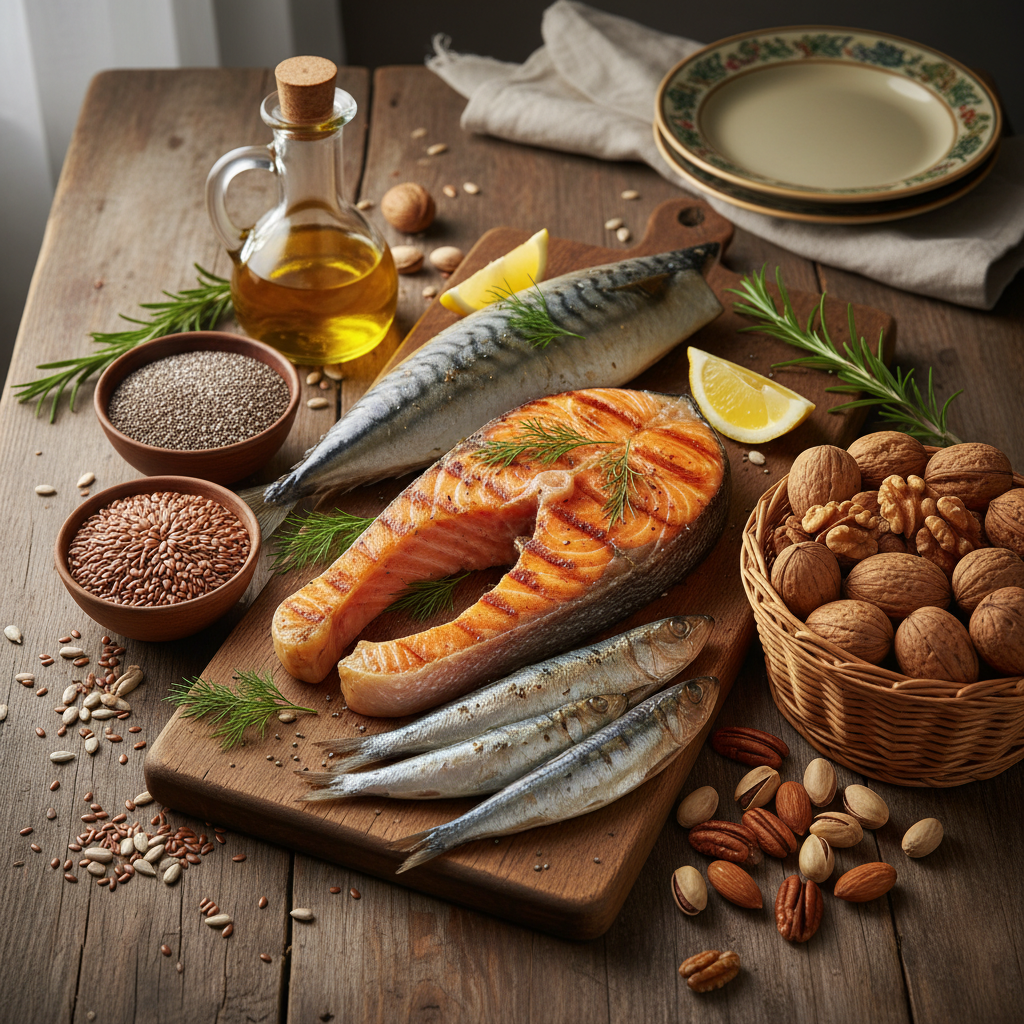
ALA (Alpha-Linolenic Acid) — Omega-3; found in flaxseed, chia, and walnuts. The precursor to EPA and DHA.
-
2
EPA (Eicosapentaenoic Acid) — Omega-3; found in fatty fish (mackerel, sardines, tuna). Associated with general cardiovascular support in research.
-
3
DHA (Docosahexaenoic Acid) — Omega-3; central to brain and retinal structure. Present in fatty fish and algae-derived sources.
-
4
LA (Linoleic Acid) — Omega-6; found in vegetable oils, sunflower seeds, and most nuts. Widely present in Indonesian culinary traditions.
General Benefits in Research Literature
- —Contributes to cellular membrane health and fluidity
- —Supports general cardiovascular and circulatory functions
- —Aids in the maintenance of neurological structure
- —Associated with general inflammatory balance in nutritional studies
Information & Context Notice
This content is for informational purposes only and does not constitute individual medical advice. General approaches to well-being vary among individuals, and this information does not substitute professional consultation. The categories described above do not represent product recommendations, dosage guidance, or treatment protocols. Always consult a qualified healthcare professional.